Dislocation of the paw in cats
Dislocation of the paw is a rare occurrence among cats. Often, owners may not notice the problem and fail to start timely treatment. Most breeds have a certain "margin of strength" of joints, and therefore even serious damage manifests itself in the form of sprains, which go away on their own. Dislocation of limbs is most often found among large breeds of the feline family. In this article, we will talk about the causes of injury, the clinical picture, and first aid. The causes of dislocation are either congenital or acquired in nature. Genetic pathology occurs in large breeds such as Maine Coons, Himalayan Persians, etc. Symptoms may begin to appear at an early age - from six months or more. Dislocations of an acquired nature occur in the following cases: injury to a limb during a fight with other animals, an accident or a fall from a great height, careless handling by the owner, injury in domestic conditions, etc. Intensive mechanical loads also negatively affect the condition of the musculoskeletal system. It's not just the joints that suffer, but also the muscles or ligaments. Dislocation is a common occurrence among cats suffering from chronic pathologies: rickets, arthritis, osteoarthritis, osteomalacia, etc.
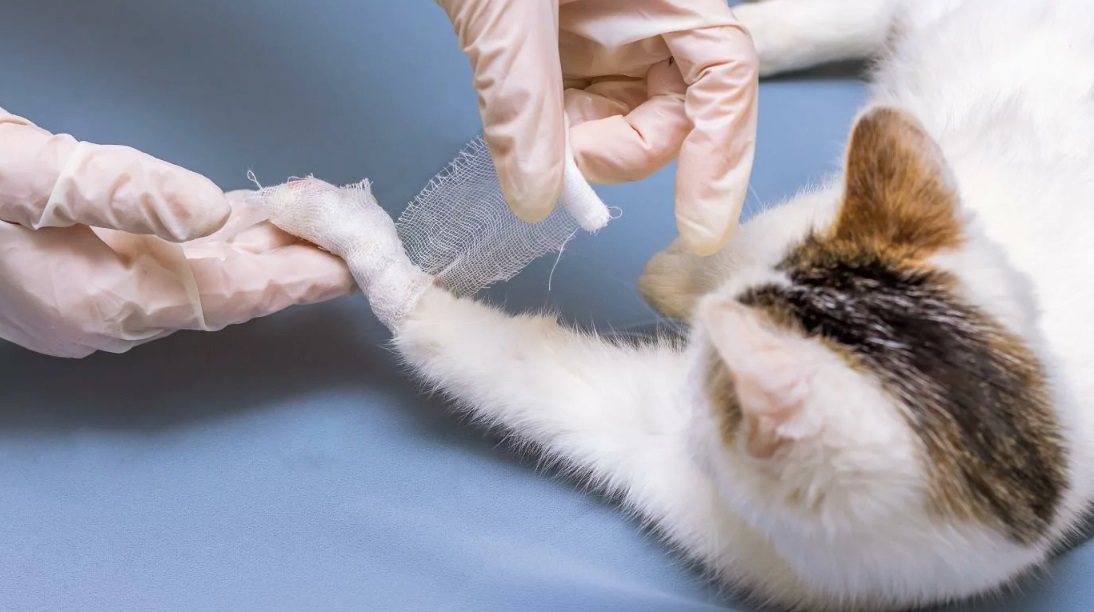
Symptoms of dislocation The clinical picture of the disease is pronounced. First of all, the animal's gait changes, it begins to limp and lean on three paws. In addition, there is swelling of the affected area, the pet experiences discomfort and pain. Dislocation can affect both the front and hind legs. The severity of the injury is assessed by the condition of the limb. The classification of the disease is as follows: complete dislocation – contact between the surfaces of the joints is lost, excessive mobility appears, incomplete – the paw swells, any movement or load is accompanied by discomfort and pain in the affected area. First aid If you suspect a dislocation in your pet, you should immediately seek help from a veterinary clinic. They will conduct the necessary research and prescribe treatment. You should also provide first aid to the cat by performing the following manipulations: to ensure rest and immobility, apply a bandage to the damaged joint for fixation, apply a cold compress to the dislocation site. The Drug Veterinary clinic will diagnose the joint using modern equipment. The diagnosis is made only on the basis of the complete clinical picture. If necessary, the dislocation will be corrected, a fixing bandage will be applied and the necessary medications will be prescribed. You should not self-medicate, as in some situations surgery may be required. Therefore, the only correct solution is to immediately take the pet to the doctor. To make an appointment or consult with a specialist, please call +7 (4872) 52-12-21 or +7 (961) 260-01-61.
Мы в соц сетях



Attention!
Promotion!
When you sign up through the website, you get a 10% discount on all services!
Sign up©Copyright All rights reserved 2026.
 English
  Russian